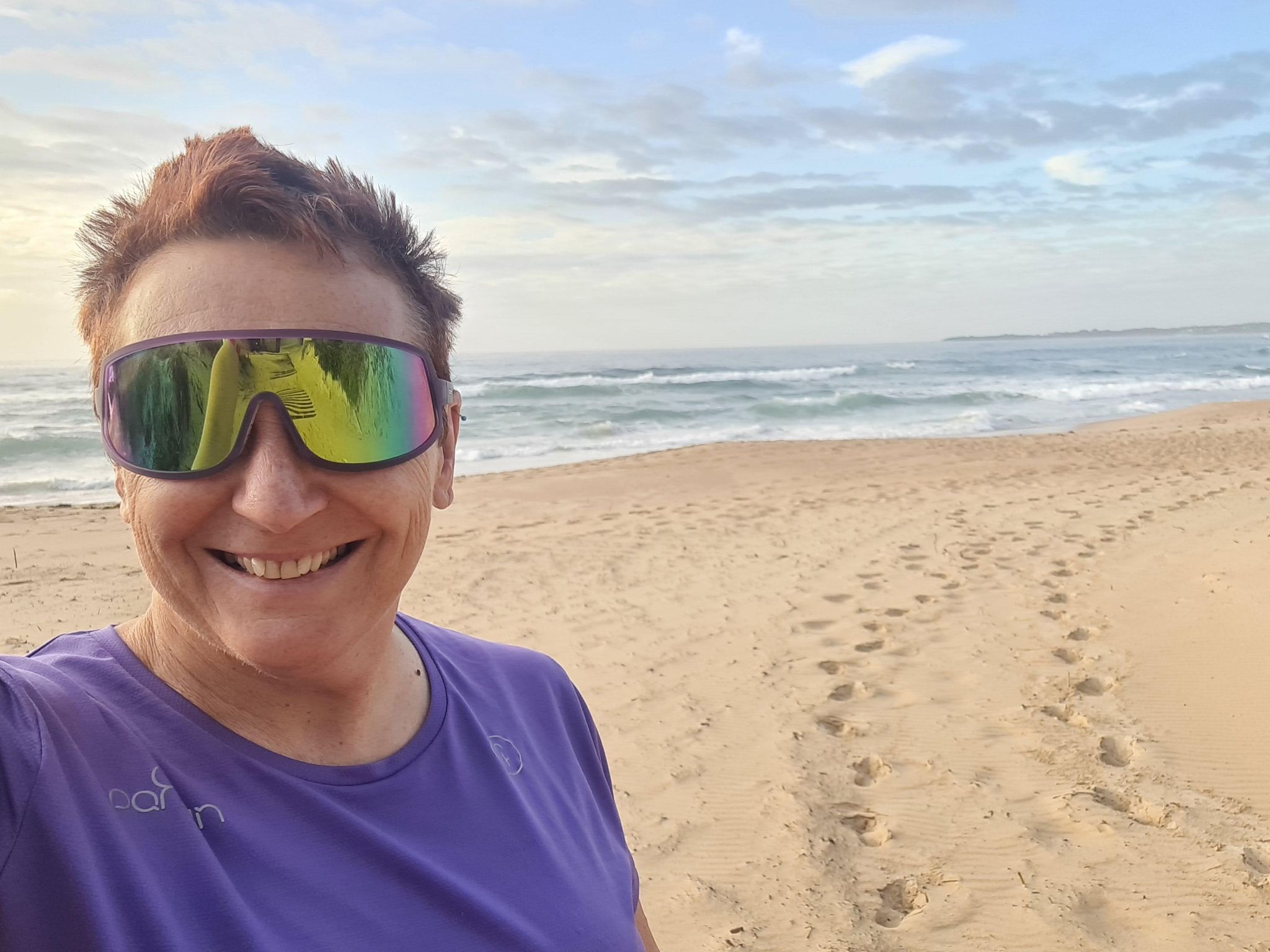
Tanya Winter’s Sandon Point parkrun – parkrun Progress Report
This week’s parkrun Progress Report takes us to the beautiful Sandon Point parkrun in Australia, where athlete Tanya Winter lined up for a well-earned Saturday hit-out during a massive week of racing at the World Triathlon Championships back in October.
And what a week it was.
Before breaking down her run, it’s worth noting the context:
- Wednesday: Aquabike
- Thursday: Sprint Triathlon
- Saturday: parkrun
- Sunday: Mixed Team Relay
That’s four events in five days — a load that would leave most athletes exhausted before they even hit the start line of parkrun. With this in mind, Tanya’s parkrun performance becomes even more impressive.
Course Overview: The Classic T-Shape
Sandon Point features a distinctive and enjoyable T-shaped course, beginning with a straight section, branching left into the top of the T, then returning and finishing back down the stem. It’s mostly flat, with only some gentle undulation — nothing dramatic, but enough to keep things interesting.
The terrain shows slight rises and falls across the kilometres, with a pattern that looks roughly like:
4 down → 3 down → 5 up → 8 down → 2 down.
In other words, a friendly profile for a steady, rhythm-based run.
Tanya’s Performance: Smart, Controlled, and Strong
Despite the heavy race load, Tanya produced a very respectable 31:56. Given everything she had on her plate with Worlds, this was never going to be her fastest outing — yet she still executed an excellent run.
A Textbook Pacing Strategy
Her pacing tells the real story:
- First Km: Slower and controlled — exactly what we want. Ideally, I recommend starting ~10–15 seconds slower than your target pace (around 6:35–6:40 for her). Tanya came in a little slower than that, but considering accumulated fatigue, it was absolutely appropriate.
- Mid-run: She settled into her rhythm nicely.
- Final kilometre: Her fastest of the day — perfect execution. Finishing strong is a sign of excellent pacing and resilience.
The second kilometre, which included the steepest uphill, was understandably one of the slower splits, but the way she finished more than made up for it.
Cadence: Consistent and Efficient
Although we didn’t have heart rate data this week, we did have cadence — and the numbers were solid:
- Mostly 170+ steps per minute for the first half of the run.
- Slight drop toward the end, dipping into the 168s.
- A kick back to 172 spm during the final push — great to see.
Ideally, I always prefer seeing higher cadence in the final kilometre, where speed increases and form sharpens. Tanya wasn’t far off that target, and considering her fatigue from multiple races, her consistency was excellent.
Overall Assessment
Tanya handled this parkrun exactly how a smart athlete should during a demanding race week:
✔ Controlled start
✔ Settled rhythm
✔ Strong finish
✔ Solid cadence
✔ Excellent result under load
A 31:56 on tired legs after two World Championship events? That’s outstanding work.
Well done, Tanya — you should be proud of this performance.
Want Your Own Personalised Parkrun Progress Report?
If you’d like the same detailed breakdown of your parkrun performance — including pacing, technique, and personalised improvement tips — I’d love to help.
👉 Apply for your own free Parkrun Progress Report here:
https://qwik-kiwi.kit.com/parkrun_progress_report
Let’s make your next parkrun your best yet.
One Reply to “Tanya Winter’s Sandon Point parkrun: Full Performance Breakdown & Coaching Analysis”