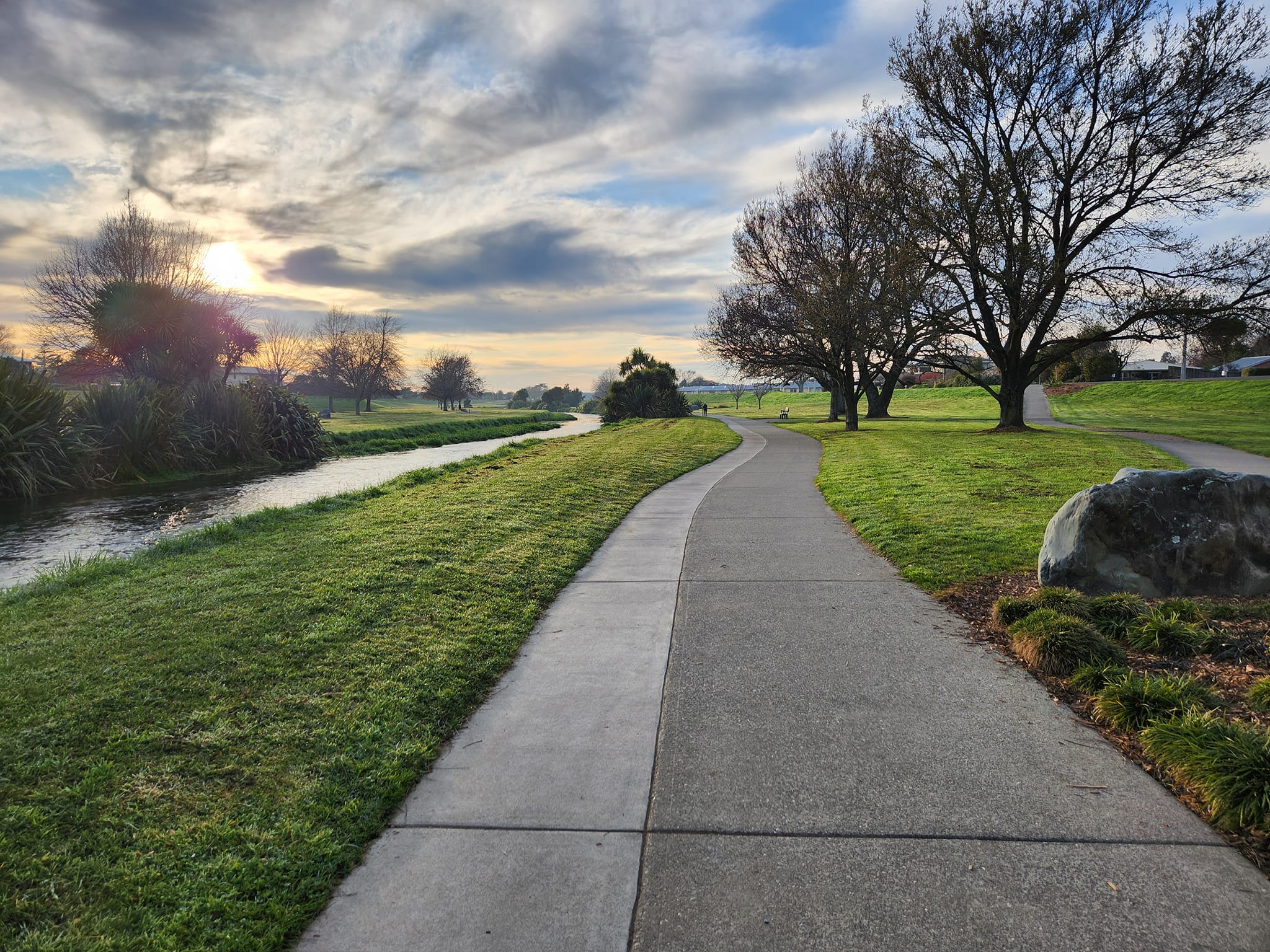
parkrun Progress Report: Blenheim parkrun
The difference between a good parkrun and a great parkrun often comes down to one thing: how you distribute your effort.
In this week’s parkrun Progress Report, I’m analysing my own run at Blenheim parkrun, which took place the week before my Riverlution run in Christchurch. Interestingly, the finishing times were almost identical — but the way the runs unfolded could not have been more different.
Blenheim is a great example of how smarter pacing leads to a stronger, more controlled performance, even when the clock doesn’t immediately show a big time difference.
The Result
- Time: 22:06
- Course: Blenheim parkrun (accurate 5 km)
This route is one I’ve used for years as a 5 km time-trial course, long before parkrun existed. I know it well, and on this particular morning I recorded some of my fastest segment times on parts of the course — a good sign that the effort was well managed.
Kilometre Splits
Here are the splits from the run:
- 1 km: 4:25
- 2 km: 4:34
- 3 km: 4:31
- 4 km: 4:21
- 5 km: 4:13
What immediately stands out is the large negative split.
- The slowest kilometres were the first three
- The fastest kilometres were the final two
- The fastest kilometre was the last one
This is exactly what we’re aiming for in a well-executed parkrun.
What the Splits Tell Us
This pacing pattern shows:
- A conservative, controlled start
- Clear acceleration from kilometre three onward
- A strong finish with plenty left in the tank
In contrast to my Riverlution parkrun the following week — where I started faster and faded slightly — this Blenheim run demonstrates well-managed effort distribution from start to finish.
Fitness wasn’t the limiter here. Pacing confidence was still building early, but once committed, the pace lifted decisively.
Physiological Trends: Effort That Builds, Not Spikes
The supporting data backs this up:
- Heart rate gradually increased throughout the run, finishing highest in the final kilometre
- Average running power was highest in the last kilometre
- Cadence stayed relatively consistent, with peak cadence occurring early as I accelerated into rhythm
This is exactly what we want to see — effort rising as the race progresses, not spiking early and forcing damage control later.
Could It Have Been Even Better?
Yes — and that’s the key learning point.
The middle kilometres (4:34, 4:31) suggest I may have been a little too cautious while settling in. With slightly more commitment through that section, it’s possible the run could have been faster again without sacrificing the strong finish.
That said, the final two kilometres (4:21, 4:13) show decisive intent and confirm that energy was absorbed early and released late.
Key Takeaway for parkrunners
Don’t just run your parkrun — race it.
A controlled start, patience through the middle, and a confident finish will almost always produce a better performance than chasing pace early and hanging on.
If your goal is to finish strong, feel in control, and get the most out of your current fitness, negative splitting is your friend.
Want Help Improving Your parkrun?
If you’d like personalised feedback on your parkrun performance—just like this—there are two great ways I can help:
🟢 Apply for Your Own parkrun Progress Report
I’ll review your parkrun data and provide clear, practical insights to help you improve.
👉 Apply here:
https://qwik-kiwi.kit.com/parkrun_progress_report
🚀 parkrun Kickstart: 4 Weeks to Your Best Saturday Run Yet
If you’re new to parkrun, returning after a break, or feel like you’re guessing your way through each Saturday, parkrun Kickstart is the perfect place to begin.
This 4-week plan is designed to help you build consistency, learn how to pace yourself properly, and arrive at parkrun feeling prepared rather than pressured. You’ll get clear, structured sessions, simple guidance you can actually follow, and a framework that teaches you how to run smarter, not just harder.
parkrun Kickstart takes the uncertainty out of your training so you can line up each Saturday with confidence, control your effort, and finish stronger than you started.
Join parkrun Kickstart and lay the foundations for better parkruns — this month and beyond.
👉 Get started with parkrun Kickstart
🟢 vRRR
A recording of this parkrun is available on the video training platform vRRR – if you would like to run the course with me.
Quality Level II training is the foundation of endurance — but treadmill runs don’t have to be boring. If you have a Bluetooth-enabled treadmill, connect it to vRRR and run real routes from around the world while keeping your heart rate in check. Watch the scenery change, track your metrics in real-time, and build your aerobic engine that makes parkrun PBs possible. Real scenery, real-time data, real endurance gains. vRRR has a free 28 day trial, with no credit card required. Get started »