Not every valuable 5K has to be a parkrun.
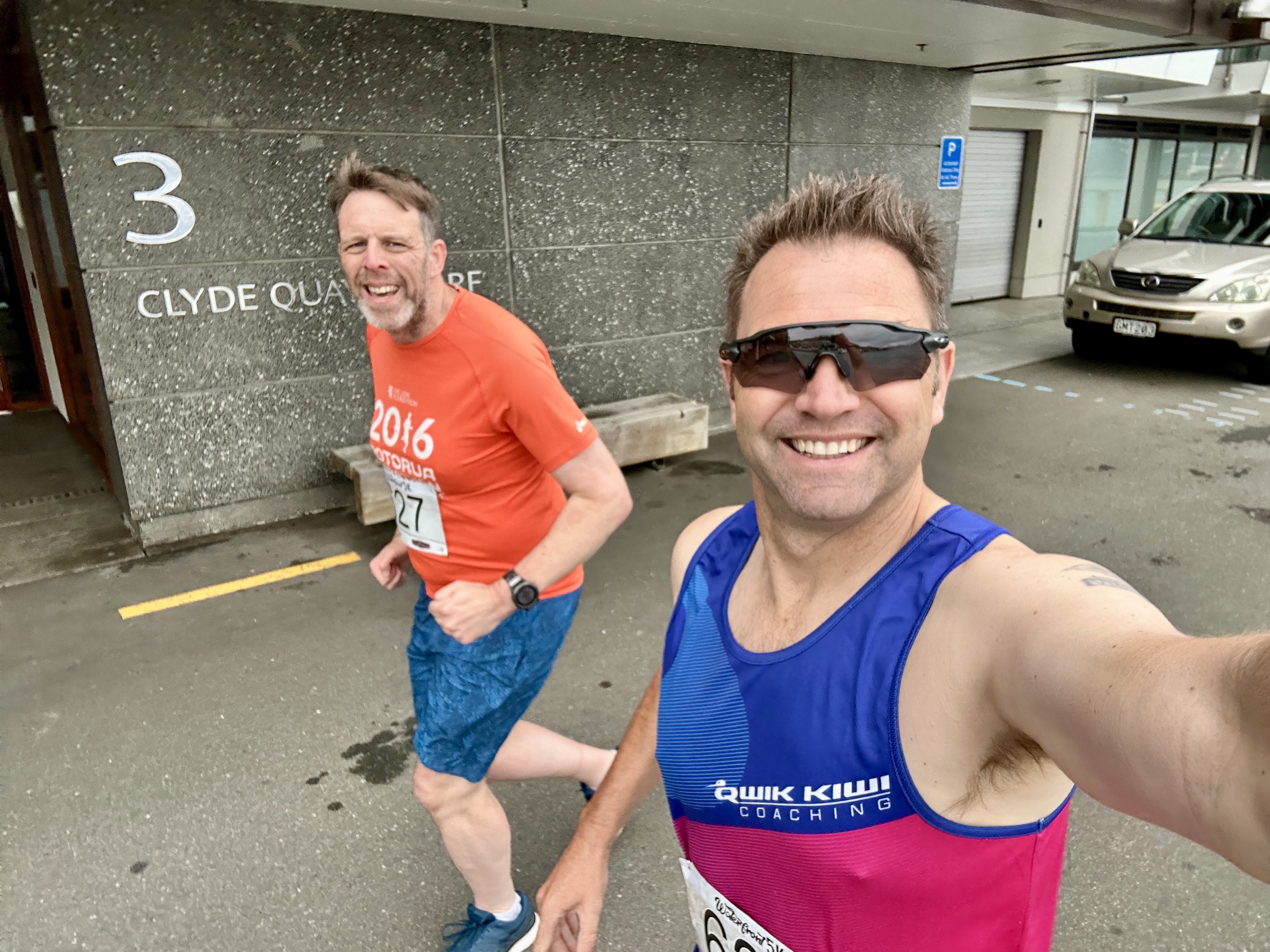
This (not) parkrun Progress Report looks at my run at the Wellington Scottish Athletics Club Waterfront 5k — a flat, fast course that provided the perfect opportunity to execute a Level IV (threshold) effort rather than chase an all‑out PB.
The goal was simple and specific:
- Hold Level IV intensity throughout
- Sit within 4:30–4:39 min/km pace
- Finish strong and controlled
That made this run an excellent case study in precision pacing and effort discipline.
The target: Level IV execution, not racing
Level IV sits right on the edge of sustainable discomfort. It’s hard, but controlled — the intensity you can hold when fitness, focus, and pacing line up.
For this run, Level IV meant:
- Staying patient early
- Letting heart rate rise gradually
- Avoiding the temptation to overreach in the opening kilometres
On a flat course like the Wellington Waterfront, this becomes a pure test of execution, not terrain management.
The splits and data
Here’s how the run unfolded:
- 1st Km: 4:31 — 406W — HR 146 (ave) / 158 (max) — Cadence 169
- 2nd Km: 4:35 — 395W — HR 159 / 161 — Cadence 170
- 3rd Km: 4:36 — 398W — HR 162 / 166 — Cadence 170
- 4th Km: 4:36 — 405W — HR 168 / 174 — Cadence 170
- 5th Km: 4:21 — 420W — HR 172 / 183 — Cadence 171
Four kilometres sit cleanly inside the Level IV range, followed by a decisive final kilometre.
From a coaching perspective, this is exactly what you want to see.
What the pacing tells us
The pacing pattern shows restraint first, confidence later.
Rather than forcing the pace early, the effort was allowed to build naturally. Power stayed consistent through the middle of the run, heart rate rose steadily rather than spiking, and cadence remained remarkably stable.
That stability matters. When cadence and power hold steady under pressure, it’s a strong indicator that form and mechanics aren’t breaking down.
The final kilometre — faster pace, higher power, higher heart rate — confirms that there was still room to move after four controlled kilometres.
Heart rate behaviour: textbook Level IV
Heart rate progression across the run was smooth and predictable:
- No early spike
- Gradual rise as the effort accumulated
- Peak values only appearing in the final kilometre
This is exactly what we want from a threshold‑level effort. It shows the system was under control early and only pushed to the upper limit once the work was already done.
Cadence consistency: an underrated win
Cadence hovered between 169–171 throughout the entire run.
That level of consistency across a hard 5K suggests:
- relaxed mechanics
- efficient stride
- no late‑race tightening or over‑striding
It’s one of the quieter signs of a well‑executed performance — but an important one.
The warm‑up: good, but with room to improve
The warm‑up included 10 minutes at Level II prior to the race briefing. That was sufficient to avoid stiffness and early shock, but the data suggests that adding 2-3 short Level IV activations could have sharpened the opening kilometre slightly.
That’s not a flaw — just an opportunity to gain improvement.
Why this matters for parkrun performance
Even though this wasn’t a parkrun, the lessons transfer directly:
- Flat courses reward discipline
- Threshold efforts are built on control, not aggression
- Finishing strong is usually a sign you paced correctly
If this had been raced all‑out, there was likely another 10–15 seconds available. That’s exactly what you want to see when the goal is controlled execution rather than maximum performance.
Key takeaway
You don’t get better at 5K by forcing pace — you get better by mastering effort.
This run shows how using a 5K as a structured Level IV session can build fitness, confidence, and pacing skill — without the emotional cost of racing every weekend.
Want help applying this to your own running?
If you want to improve your pacing, consistency, and confidence at parkrun, parkrun Kickstart is designed to help you do exactly that.
It’s ideal if you:
- are new to parkrun
- feel fit but inconsistent
- want to understand how hard to run — and when
👉 Join parkrun Kickstart here:
https://www.coachraytraining.co.nz/signup/parkrun-kickstart
And if you’d like a personalised breakdown of your own parkrun or 5K performance, you can apply for a parkrun Progress Report below:
�� https://qwik-kiwi.kit.com/parkrun_progress_report
vRRR
A recording of this event is available on the video training platform vRRR – if you would like to run the course with me (and vRRR founder Gareth).
Quality Level II training is the foundation of endurance — but treadmill runs don’t have to be boring. If you have a Bluetooth-enabled treadmill, connect it to vRRR and run real routes from around the world while keeping your heart rate in check. Watch the scenery change, track your metrics in real-time, and build your aerobic engine that makes parkrun PBs possible. Real scenery, real-time data, real endurance gains. vRRR has a free 28 day trial, with no credit card required. Get started »